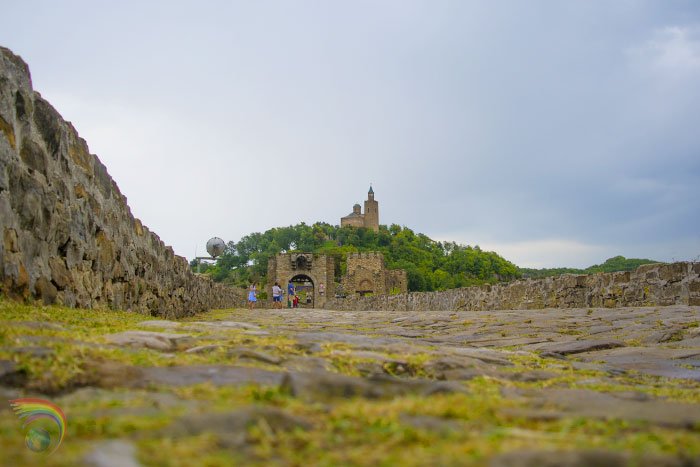
On our return journey, we left the main road near Kaplanli and turned toward Skopia, a city of great trade and the largest settlement in these parts. This change of route proved worthwhile, for Skopia was one of the most important cities we encountered on our travels. It was well known for its industry, population, and pleasant surroundings, and it stood out clearly from the smaller towns we had passed earlier The Fortress and the Road into Kosovo.
The Location and History of Skopia
Skopia, known as Scopi by Ptolemy, and called Uskopia by the Turks, is situated in the farthest parts of Upper Moesia, close to the borders of Macedonia. The city lies at the foot of Mount Orbeius, beside the River Vardar, also called the Axios. The land around it is fertile and agreeable, with the city built partly upon hills and partly across wide plains. This setting gives it both beauty and practical advantages for trade and defense.
Historically, Skopia held religious importance. It was first the seat of a bishop, and later elevated to an archbishopric. Even in later times, it remained a pleasant and populous place, attracting merchants, craftsmen, and travelers from many regions.
Trade, Tanneries, and Industry
One of the most remarkable features of Skopia is its strong industrial life. The city contains around seven hundred tanners, an unusually large number. These craftsmen tan hides in long stone troughs, carefully constructed for this purpose. The leather produced here is of excellent quality and is exported to many other regions. This trade provides employment to many families and contributes greatly to the wealth of the city.
Because of this industry, Skopia has become an important supply center for leather goods, which are highly valued in surrounding territories.
Fine Houses and Notable Buildings
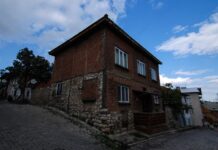
Skopia also contains many fine houses and impressive buildings. Among them are several handsome sepulchral monuments, as well as the residence of the Cadih, a high legal official. Another notable house belongs to the Emir, a relative of Mahomet, whose father was greatly respected in these lands Ephesus Day Tours.
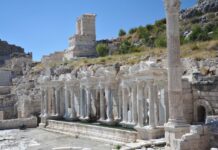
In the courtyard of the Emir’s house stands a remarkable fountain, unlike any I had seen before. It is built in the form of a small castle, surrounded by many little towers. From the tops of these towers, water flows continuously, creating both a pleasant sound and a striking visual effect.
Interior Decoration and Public Spaces
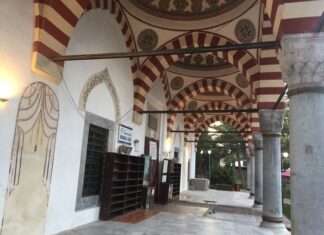
The finest houses in Skopia are furnished with rich carpets, used not only for comfort but also as a sign of status. The ceilings are divided into triangles, squares, and other geometric shapes, carefully gilded and painted in many colors. However, there are no images of people, animals, or plants, in keeping with local customs and religious rules.
The city also has a large and beautiful bezesten, or covered market, roofed with lead. Many of the streets are covered with wooden roofs, providing shelter from sun and rain and making trade more comfortable throughout the year.
Surroundings and Natural Beauty
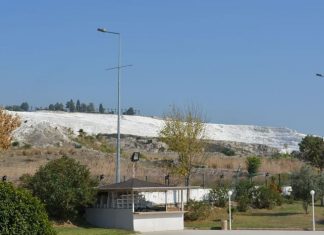
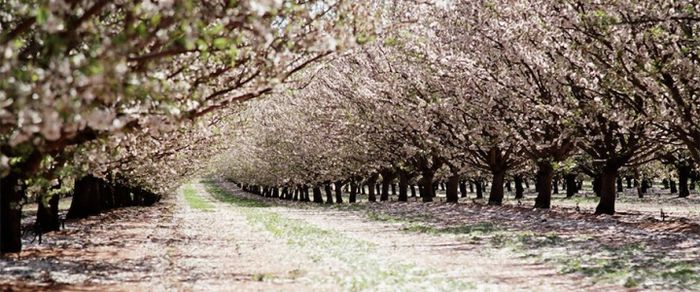
Beyond the town itself, there are many pleasant places both inside and outside the city walls. Trees, gentle hills, and green valleys surround Skopia, giving it a peaceful and attractive appearance. These natural features, combined with its strong trade and fine buildings, make Skopia one of the most agreeable and important cities in the region.